Native Phages vs Antibiotics
Could Native Phages Outperform Other Antibacterial Treatments?
Focus Keyword: native phages vs antibiotics
For decades, antibacterial treatments have largely centered around broad-spectrum approaches designed to suppress or eliminate bacteria. While these methods remain foundational, ongoing research is prompting a new question:
Could more precise, biologically aligned mechanisms offer a different way to interact with bacterial populations?
One area gaining attention involves native bacteriophages — naturally occurring elements within the body that interact with bacteria in highly specific ways.
How Traditional Antibacterial Approaches Work
Conventional antibacterial strategies, including antibiotics, are designed to target bacteria broadly. In many cases, this can be effective, especially in acute infections.
However, these approaches may also present challenges:
- They may not distinguish between different bacterial populations
- They can impact broader microbial ecosystems
- They may not always address complex or persistent conditions
This has led researchers to explore alternative frameworks that focus on specificity rather than broad suppression.
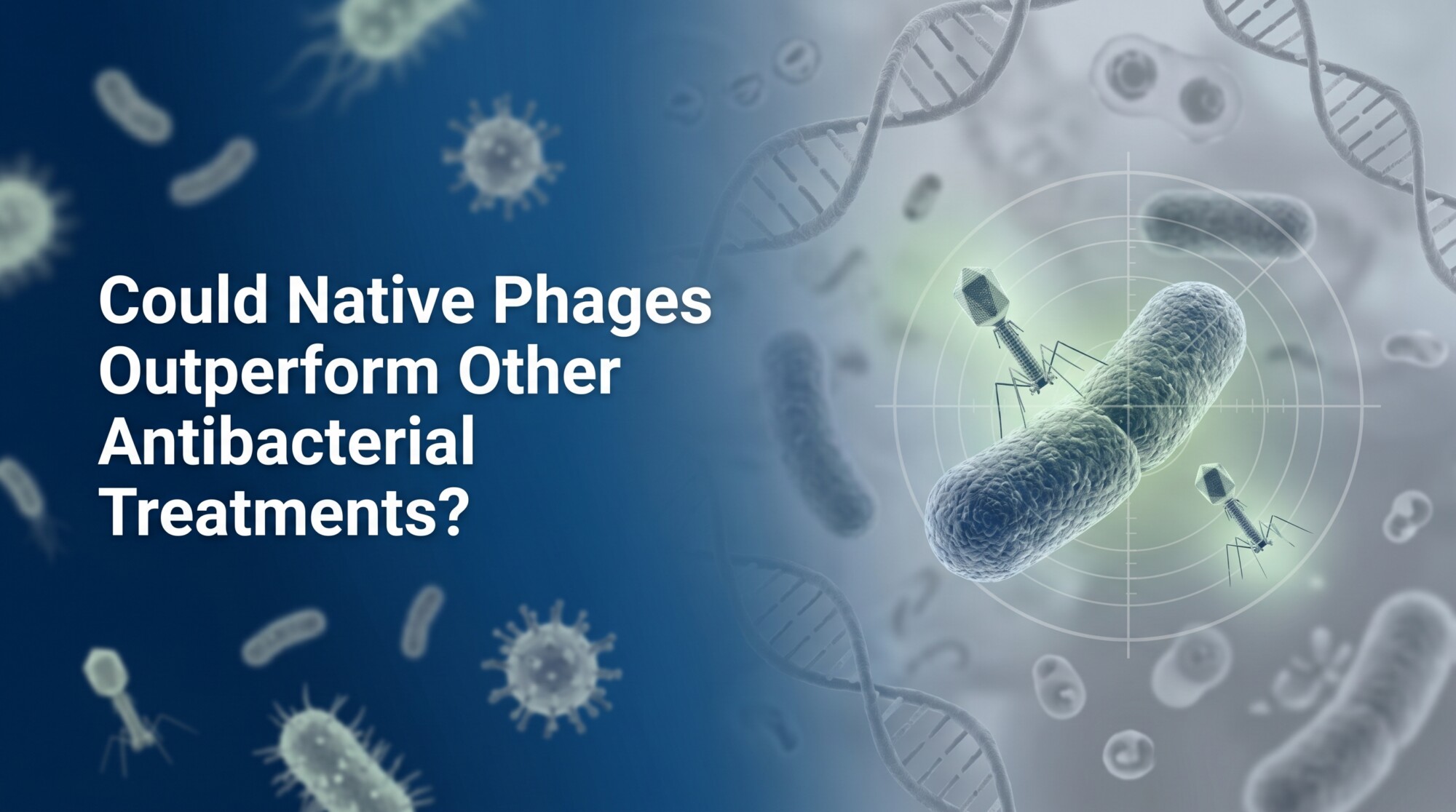
Native phages, or bacteriophages, are naturally occurring biological elements that interact with bacteria. They are part of the body’s internal ecosystem and have highly specific relationships with microbial targets.
Unlike external interventions, native phages already exist within the body — raising questions about how they may function when activated or supported.
For foundational context, see what is INPT and how INPT works.
Exploring Induced Native Phage Therapy (INPT)
Induced Native Phage Therapy (INPT) is an area of research focused on stimulating the body’s own bacteriophages rather than introducing external antibacterial agents.
This approach is being explored for its potential to:
- Engage bacterial populations with greater specificity
- Work within the body’s existing biological systems
- Support individualized responses based on unique microbial patterns
To understand how this compares conceptually, see INPT vs antibiotics.
Specificity vs Broad-Spectrum Approaches
A key difference between traditional antibacterial methods and phage-based research lies in specificity.
- Broad-spectrum approaches aim to affect wide ranges of bacteria
- Phage-based interactions are inherently more targeted
This distinction has led to growing interest in how precision may influence outcomes, particularly in complex or persistent conditions.
Learn more about this concept in specificity and sensitivity in Lyme disease.
Could Native Phages Offer a Different Framework?
The question of whether native phages could “outperform” other antibacterial approaches is still being explored. Rather than direct comparisons, current research is focused on understanding how different mechanisms function.
Key considerations include:
- How specificity may influence bacterial interaction
- The role of microbial ecosystems in overall health
- Variability in individual biological responses
This perspective suggests that effectiveness may depend on context, rather than a one-size-fits-all solution.
Rethinking Persistent Conditions
In conditions where symptoms persist despite standard approaches, researchers are increasingly exploring broader biological frameworks.
This includes:
- Multi-microbial dynamics
- Systems-based models of health
- Activation-based biological processes
For related concepts, see multi-microbial activation syndrome.
A Shift Toward Precision and Biology-Aligned Thinking
Rather than replacing existing treatments, emerging research into native phages represents a shift toward precision and biological alignment.
This approach emphasizes:
- Working with existing biological systems
- Understanding microbial relationships
- Exploring targeted rather than generalized strategies
As research continues, these ideas may help expand how antibacterial approaches are understood and applied.
Source
This article is informed by research and clinical perspectives published by Biologix Center:
Induced Native Phage Therapy for the Treatment of Lyme Disease
Phage Therapy for the Treatment of Lyme Disease
Learn More
To better understand evaluation and program structure, visit:
What to Expect at Biologix Center
Frequently Asked Questions
What are native phages?
Native phages are naturally occurring bacteriophages that interact with bacterial populations as part of the body’s biological ecosystem.
How do native phages differ from antibiotics?
Antibiotics typically act broadly, while phage-based interactions are more specific to particular bacteria.
Is INPT widely used?
INPT is an area of ongoing research and continues to be studied for its potential applications.
Are phage-based approaches a replacement for antibiotics?
Current research explores these approaches as part of a broader framework, not necessarily as direct replacements.
Let Us Help You
For almost 30-years the Biologix Center for Optimum Health has specialized in innovating new precision testing and treatments that work to rapidly identify what other tests and treatments are missing in people with treatment-resistant illnesses of all types. Biologix is a center of last resort for many people who are out of options, even following treatment at big-name hospitals and treatment centers.
This is not a cookie-cutter, one-size-fits-all, reductionist type of treatment. After all, LD does not stem from just one cause. There are many potential causes that can be addressed in our whole-body testing and treatments. Our difference is that we do not accept the idea that any illness is incurable. Doctors should at least strive towards that goal.
Call our Patient Care team to get started: 615-398-6196. If you do not have Lyme Disease but have a different illness, the programs of care may still be your best next step. Financial assistance may be available upon approval to help those in financial distress who desire to be treated at the Biologix Center.