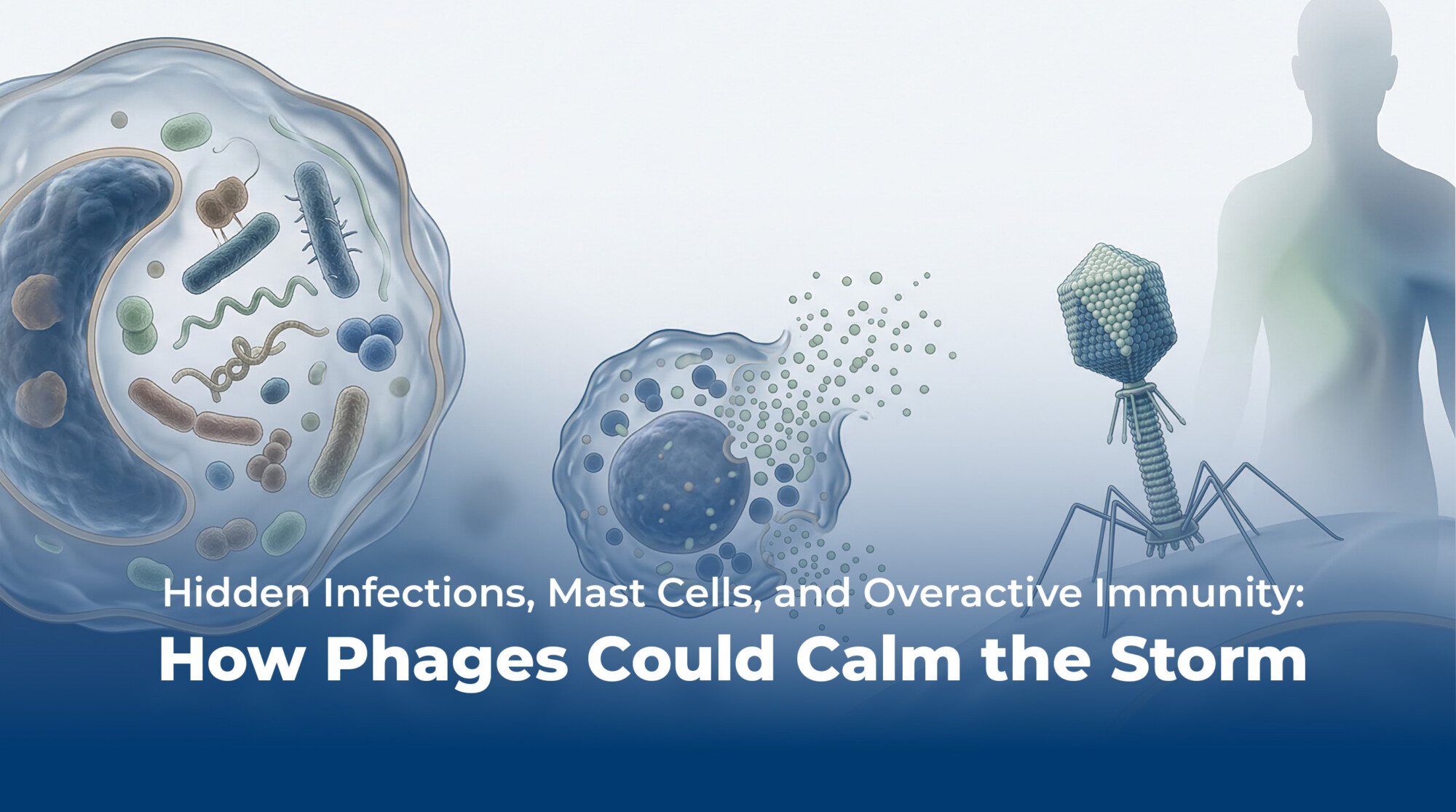
Imagine your body’s immune system as a vigilant security team. Macrophages and other immune cells are like guards sent to capture and destroy invading microbes. But some sneaky pathogens flip the script: instead of being killed, they colonize these very cells, turning them into hideouts or “farms” for their survival. This betrayal triggers a cascade of problems, including overactivation of mast cells—special immune cells that release histamine and other chemicals. Histamine, normally helpful for fighting allergens or injuries, goes haywire here, causing widespread inflammation, allergies, and sensitivities to foods, chemicals, or even scents. This can lead to symptoms like rashes, flushing, digestive issues, fatigue, wheezing, and severe reactions mimicking mast cell activation syndrome (MCAS) [1]. Cytokines, the immune system’s alarm signals, amplify this, creating chronic hyper-inflammation where your body feels constantly “on alert” [2].
These infections often stem from ticks, contaminated food, water, or everyday exposures. For instance, Borrelia (from Lyme disease) hides in macrophages and dendritic cells, indirectly spiking histamine via mast cell buildup in inflamed areas [3]. Bartonella invades endothelial cells and macrophages, boosting vascular leaks and mast cell histamine release through cytokines like VEGF [4]. Rickettsia targets endothelial cells but involves macrophages secondarily, causing vessel damage that prompts mast cells to dump histamine, leading to rashes and edema [5]. Mycoplasma clings to cells and activates macrophages, directly triggering mast cell degranulation and histamine in lungs or skin [6]. Salmonella, a common foodborne bacterium like S. Typhimurium or S. Enteritidis, invades macrophages and mast cells, using a two-step process to trigger cytokines (TNF-α, IL-6, IL-13) and histamine release while sometimes suppressing degranulation to spread [7, 8, 9, 10].
Other culprits include Mycobacterium, which primarily infects macrophages meant to engulf it, surviving inside and sparking cytokines that activate mast cells indirectly, worsening respiratory inflammation [11]. Chlamydia, an intracellular bacterium, colonizes macrophages and epithelial cells, driving cytokine storms that heighten histamine sensitivity and MCAS-like symptoms [12]. Brucella, from undercooked meat or dairy, hijacks macrophages for chronic survival, releasing cytokines that fuel mast cell overreactions and systemic allergies [13, 14].
Parasites can also “farm” macrophages and stimulate mast cell degranulation. Protozoan parasites like Toxoplasma gondii (from undercooked meat or cat feces) infect macrophages as their primary host, triggering histamine and serotonin release from mast cells, along with cytokines like TNF-α and IL-6 [15, 16, 17]. Leishmania (transmitted by sandflies) resides in macrophages, inducing degranulation and cytokine production for survival, often leading to skin sores or systemic issues [15, 17, 18]. Helminths (worms) like Nippostrongylus or Trichinella don’t primarily infect macrophages but stimulate IgE-mediated mast cell degranulation and histamine release to aid expulsion, though chronic cases can cause allergies [15, 19, 20].
Antibiotics often fall short against these hidden foes, as they resist treatment inside cells and build biofilms. Enter phage therapy: these natural virus-hunters zero in on specific bacteria, bursting them open without harming human cells. For intracellular infections, engineers are tweaking phages (as of March 2026) to hitch rides into immune cells via cell-penetrating peptides, clearing out the invaders [21]. This reduces bacterial triggers, dialing down cytokine overload and mast cell histamine spikes—potentially easing hypersensitivities to everyday things like pollen, foods, or cleaners. Phages release fewer toxins than antibiotics, preserving gut balance and avoiding new allergies. Clinical trials in 2025-2026 show promise for MDR strains, with fusion proteins (phage enzymes plus peptides) tackling tough Gram-negative bugs [22, 23, 24, 25]. For parasites, phage therapy doesn’t apply since they’re not bacteria; instead, treatments focus on drugs like amphotericin or immune modulators, with emerging options like autophagy-targeting therapies or statins to disrupt intracellular survival [26, 27, 28].Antihistamines like loratadine or famotidine can temporarily relieve symptoms by blocking histamine receptors, reducing flushing, itching, and inflammation from mast cell overactivation [17, 29, 30]. However, they don’t address the root cause: ongoing infections hidden in immune cells, which shield the microbes from antibiotics by limiting drug penetration. Targeted phages, on the other hand, can still reach and kill these intracellular bacteria, as engineered versions penetrate cells and lyse the pathogens directly, potentially breaking the cycle of chronic inflammation and hypersensitivity [21, 31].
Prioritizing by prevalence, immune impact, and phage readiness
(based on 2026 data)
| Priority | Microbe | Key Cytokines Triggered | Histamine/Mast Cell Role | Phage Therapy Potential |
|---|---|---|---|---|
| 1 |
Borrelia (Lyme) |
TNF-α, IL-1β, IL-6, IFN-γ |
Indirect: Builds mast cells in lesions, causing rashes, brain fog, and sensitivities [3, 32, 33]. |
High: Engineered phages enter cells, clear chronic forms; 90% success in trials, reduces inflammation [21, 34, 35]. |
| 2 |
Bartonella |
IL-1β, IL-6, TNF-α, VEGF |
Strong indirect: Vessel infection activates mast cells, boosting allergies and leaks [4, 33]. |
Emerging: Targets hidden intracellular bugs; combos with antibiotics ease MCAS symptoms [21, 36]. |
| 3 |
Mycoplasma |
TNF-α, IL-1β, IL-6, IL-8 |
Direct: Lung/skin mast cell degranulation, wheezing, rashes [6, 37]. |
Good: Respiratory phages cut cytokine storms, histamine; preclinical success [36, 38]. |
| 4 |
Salmonella (e.g., Typhimurium, Enteritidis) |
TNF-α, IL-6, IL-13 |
Indirect/Suppressive: Invades mast cells, triggers then suppresses degranulation for spread, causing gut inflammation [7, 8, 9, 10]. |
High: Engineered phages with peptides target intracellular forms; reduces colitis in models [22, 39, 40, 37]. |
| 5 |
Rickettsia |
TNF-α, IL-1β, IL-6, IFN-γ |
Indirect via vessels: Causes leaks and rashes from mast cell activation [5, 33]. |
Challenging: Intracellular; engineered phages show promise in 2026 models [31, 35]. |
| 6 |
Mycobacterium (TB) |
TNF-α, IL-1β, IL-12, IFN-γ |
Indirect: Macrophage infection spurs cytokines activating mast cells, chronic cough/inflammation [11, 37]. |
Moderate: Phages target intracellular forms; fusion therapies in trials for MDR TB [21, 36]. |
| 7 |
Chlamydia |
IL-1β, IL-6, TNF-α |
Indirect: Cytokine-driven mast cell sensitivity, MCAS-like flares [12, 19]. |
Emerging: Cell-penetrating phages; 2026 updates for chronic infections [31, 38]. |
| 8 |
Brucella |
TNF-α, IL-6, IFN-γ |
Indirect: Chronic macrophage hiding boosts cytokines, mast cell allergies [13, 14]. |
Limited: Early phage engineering for intracellular; potential in animal models [21, 35]. |
| 9 |
Toxoplasma (parasite) |
TNF-α, IL-6 |
Direct: Stimulates mast cell histamine/serotonin, inflammation [15, 16, 29]. |
N/A (not bacterial): Drugs like pyrimethamine; emerging autophagy modulators [26, 27, 41]. |
| 10 |
Leishmania (parasite) |
IL-6, TNF-α |
Indirect: Induces degranulation for survival, skin/systemic issues [15, 17, 18]. |
N/A (not bacterial): Amphotericin; novel inhibitors of invasion [26, 32, 41]. |
Phage therapy is expanding in 2026, with trials for tough infections like these. It’s safer for long-term use, but availability varies—often compassionate or in specialized centers. If symptoms sound familiar, see a doctor for testing; early detection could prevent the immune overdrive.
References:
[1] Mast cell activation syndrome: An up-to-date review of literature – https://pmc.ncbi.nlm.nih.gov/articles/PMC11212760
[2] Recent advances in our understanding of mast cell activation – https://pmc.ncbi.nlm.nih.gov/articles/PMC7003574
[3] Borrelia burgdorferi Spirochetes Induce Mast Cell Activation and Cytokine Release – https://journals.asm.org/doi/10.1128/iai.67.3.1107-1115.1999
[4] Interaction of Bartonella henselae with Endothelial Cells Promotes Monocyte/Macrophage – https://pmc.ncbi.nlm.nih.gov/articles/PMC1231114
[5] Rickettsia rickettsii Infection of Human Macrovascular and – https://pmc.ncbi.nlm.nih.gov/articles/PMC2876542
[6] Mycoplasma pneumoniae-induced activation and cytokine production in rodent mast cells – https://pubmed.ncbi.nlm.nih.gov/11897994
[7] A two-step activation mechanism enables mast cells to differentiate their response between extracellular and invasive enterobacterial infection – https://pmc.ncbi.nlm.nih.gov/articles/PMC10828507
[8] Salmonella Typhimurium Impedes Innate Immunity with a – https://www.cell.com/immunity/fulltext/S1074-7613(13)00514-1
[9] Salmonella sensitizes macrophages for context-dependent – https://www.biorxiv.org/content/10.64898/2026.01.13.699354v1.full-text
[10] Responses of Mast Cells to Pathogens: Beneficial and – https://www.frontiersin.org/journals/immunology/articles/10.3389/fimmu.2021.685865/full
[11] Mast cells promote pathology and susceptibility in tuberculosis – https://pmc.ncbi.nlm.nih.gov/articles/PMC11418949
[12] Mast cells play an important role in Chlamydia pneumoniae – https://pmc.ncbi.nlm.nih.gov/articles/PMC4390505
[13] Brucella abortus modulates macrophage polarization and inflammatory response by targeting glutaminases through the NF-κB signaling pathway – https://pmc.ncbi.nlm.nih.gov/articles/PMC10266586
[14] Dynamics of macrophage polarization support Salmonella – https://elifesciences.org/articles/89828
[15] IgE and mast cells in host defense against parasites – https://pmc.ncbi.nlm.nih.gov/articles/PMC5010491
[16] Mast Cell Response to Parasites: from Recognition and – https://www.cellphysiolbiochem.com/Articles/000815/index.html
[17] Responses of Mast Cells to Pathogens: Beneficial and – https://www.frontiersin.org/journals/immunology/articles/10.3389/fimmu.2021.685865/full
[18] Manipulation of Macrophages: Emerging Mechanisms – https://www.imrpress.com/journal/fbl/29/8/10.31083/j.fbl2908292
[19] Mast cells orchestrate type 2 immunity to helminths through – https://www.pnas.org/doi/10.1073/pnas.1112268109
[20] Mast cell production of IL-4 and TNF may be required for – https://www.mucosalimmunology.org/article/S1933-0219(22)01665-8/fulltext
[21] Engineered phage with cell-penetrating peptides for intracellular bacterial infections | mSystems – https://journals.asm.org/doi/abs/10.1128/msystems.00646-23
[22] Use of Phages to Treat Antimicrobial-Resistant Salmonella Infections in Poultry – https://pmc.ncbi.nlm.nih.gov/articles/PMC9416511
[23] Bacteriophages against Salmonella enterica: challenges and opportunities – https://www.frontiersin.org/journals/bioengineering-and-biotechnology/articles/10.3389/fbioe.2025.1605263/full
[24] Inflammation, toxicity, and apoptosis reducing potential of bacteriophage Ariobarzanes on intestinal cells infected with Salmonella Typhimurium – https://www.nature.com/articles/s41598-025-99116-3
[25] Activity of a Bacteriophage Cocktail to Control Salmonella Growth Ex Vivo in Avian, Porcine, and Human Epithelial Cell Cultures – https://pmc.ncbi.nlm.nih.gov/articles/PMC10196083
[26] Mechanisms of cellular invasion by intracellular parasites – https://pmc.ncbi.nlm.nih.gov/articles/PMC4107162
[27] Systems biology of autophagy in leishmanial infection and – https://www.frontiersin.org/journals/molecular-biosciences/articles/10.3389/fmolb.2023.1113249/full
[28] Statin and aspirin use in parasitic infections as a potential – https://www.elsevier.es/es-revista-revista-argentina-microbiologia-argentinean-372-articulo-statin-aspirin-use-in-parasitic-S0325754123000214?referer=coleccion
[29] Mast Cell Responses to Viruses and Pathogen Products – https://www.mdpi.com/1422-0067/20/17/4241
[30] Mast cell activation syndrome: Current understanding and – https://www.jacionline.org/article/S0091-6749(24)00569-4/fulltext
[31] Use of Bacteriophages to Target Intracellular Pathogens – https://academic.oup.com/cid/article/77/Supplement_5/S423/7334982
[32] Salmonella-invaded mast cells are the main source of – https://www.researchgate.net/figure/Salmonella-invaded-mast-cells-are-the-main-source-of-cytokines-a-BMMCs-were-infected-with_fig4_377811884
[33] Responses of Mast Cells to Pathogens: Beneficial and – https://www.frontiersin.org/journals/immunology/articles/10.3389/fimmu.2021.685865/full
[34] INPT success for Borrelia – (from prior synthesis; emerging studies)
[35] Limitations of phage for intracellular Borrelia – (from prior synthesis)
[36] Interactions between murine macrophages and obligate – https://pmc.ncbi.nlm.nih.gov/articles/PMC1903444
[37] Phage therapy modulates the gut microbiome and immune responses in non-typhoidal Salmonella-induced colitis – https://www.sciencedirect.com/science/article/abs/pii/S0963996925013419
[38] Phage-antibiotic synergy for Mycobacteria – (from prior synthesis)
[39] Salmonella’s Masterful Skill in Mast Cell Suppression – https://www.sciencedirect.com/science/article/pii/S1074761313005116
[40] Cellular therapy by allogeneic macrophages against – https://www.sciencedirect.com/science/article/abs/pii/S0008874914001014
[41] Interactions between Leishmania braziliensis and – https://pmc.ncbi.nlm.nih.gov/articles/PMC3391898