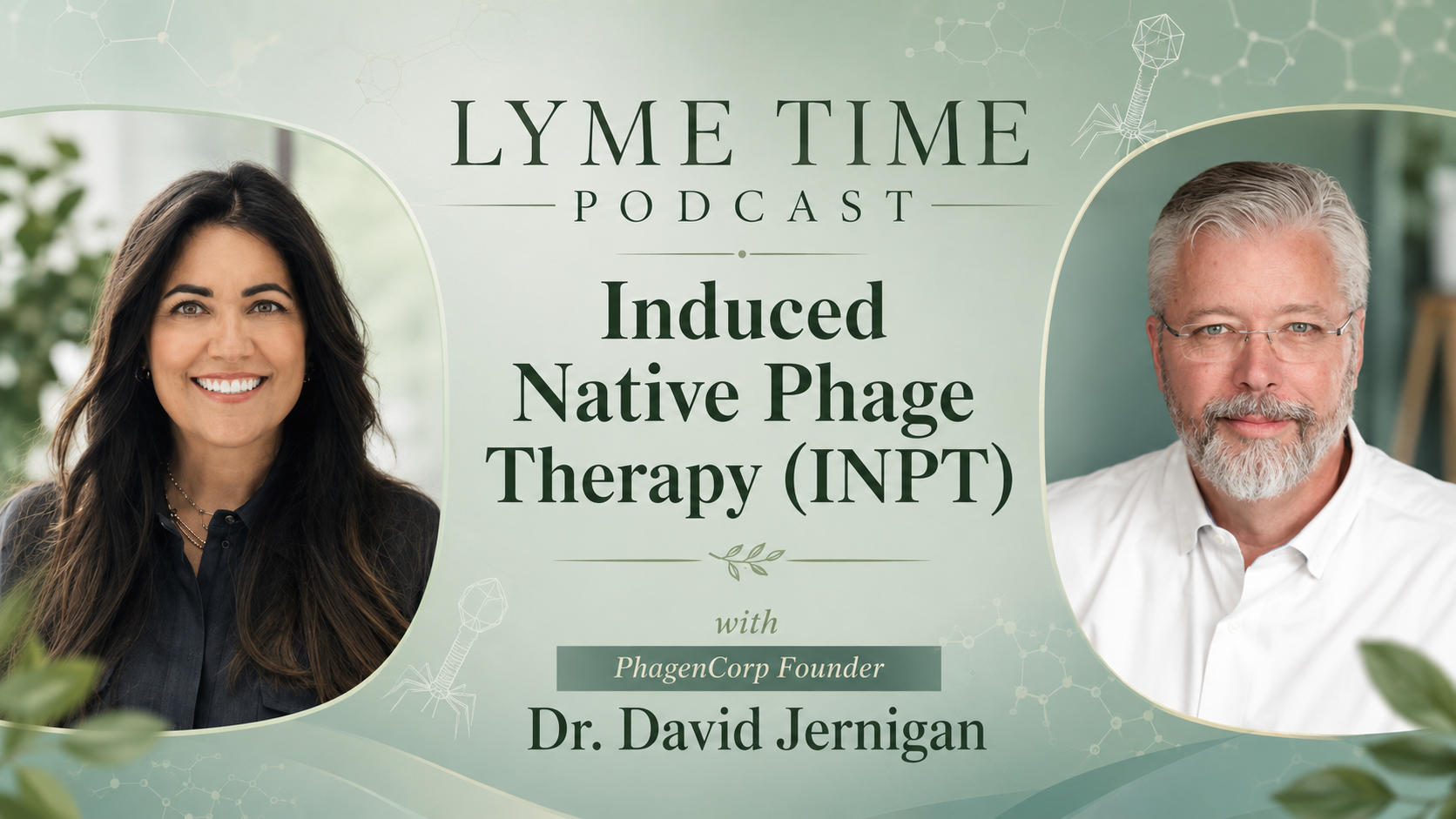
Dr. David Jernigan Explains Induced Native Phage Therapy on the Lyme Time Podcast
What if the body already carries part of the answer to complex microbial illness? In this featured interview, Dr. David A. Jernigan, founder of Biologix Center for Optimum Health, joins Ali of the Lyme Time Podcast to discuss Induced Native Phage Therapy, also known as INPT, and why it represents a different way of thinking about Lyme disease, chronic infections, mold-related illness, and complex chronic symptoms.
The conversation explores the history of phage therapy, the difference between traditional phage cocktails and INPT, the role of native phages already present in the body, and the importance of looking beyond one-microbe explanations for chronic illness.
Watch or listen to the full interview below.
Searching for answers? Start with the Biologix Center intake form.
About the Interview
In this episode, Dr. Jernigan discusses the path that led him from early Lyme disease cases in the 1990s to the development of Induced Native Phage Therapy. He explains how years of working with chronically ill patients shaped his understanding of microbial complexity, biological specificity, testing limitations, and the need for approaches that support the body without creating unnecessary stress.
The interview is especially relevant for people researching Lyme disease, persistent symptoms, mold toxicity, co-infections, neurological symptoms, MCAS-like immune reactions, SOT, antibiotics, and other chronic illness topics.
Key Topics Discussed
1. Dr. Jernigan’s History with Lyme Disease
Dr. Jernigan shares how Lyme disease became a major focus of his work after seeing difficult cases early in his career. He discusses how many patients came to Biologix after exhausting other conventional and alternative options, and how those complex cases pushed the center to think differently about chronic illness.
Learn more about Dr. David Jernigan
2. What Phages Are
Phages, or bacteriophages, are naturally occurring viruses that interact with bacteria. Traditional phage therapy uses externally sourced phages to target specific bacteria. In the interview, Dr. Jernigan explains why phage therapy has existed for more than a century and why renewed interest in phages is changing how some researchers think about bacterial illness.
Read FAQs about phage therapy and INPT
3. How INPT Is Different from Traditional Phage Therapy
Traditional phage therapy introduces external phages into the body. Induced Native Phage Therapy takes a different approach. Rather than adding outside phages, INPT is designed to activate native phages already present in the body.
At Biologix Center, INPT is part of a broader, doctor-guided program that uses real-time testing, individualized treatment planning, and full-body support to address the microbial, neurological, structural, toxic, and regulatory factors that may contribute to chronic illness.
Learn more about Induced Native Phage Therapy
4. Lyme Disease, Co-Infections, and Microbial Complexity
One of the central themes of the interview is that Lyme disease may not always be a simple, single-pathogen problem. Dr. Jernigan discusses Borrelia, Bartonella, relapsing fever organisms, and other microbial patterns that can complicate chronic Lyme presentations.
This aligns with Biologix Center’s broader view that persistent symptoms may require a more precise, systems-based approach rather than a one-size-fits-all protocol.
Explore phage treatment for Lyme disease
Read: Could Native Phages Hold the Missing Piece?
5. Why Testing Limitations Matter
The interview also touches on the challenges many Lyme patients face when they feel sick but cannot get clear answers from standard lab testing. At Biologix Center, testing is not viewed as a single isolated event. Instead, doctors use a broader assessment process to evaluate microbial patterns, toxicity, organ stress, and the body’s real-time responses.
Read more about Lyme disease testing limitations
Learn how Biologix identifies pathogens for phage activation
6. Mold, Mycotoxins, and Overlapping Chronic Illness Patterns
Dr. Jernigan explains that many chronically ill patients are not dealing with Lyme alone. Mold toxicity, mycotoxins, dental infections, neurological involvement, immune reactivity, and other stressors may also play a role.
This is why Biologix Center evaluates the whole person rather than focusing only on one diagnosis or one treatment category.
Learn more about mold toxicity
7. INPT, SOT, Antibiotics, and Other Treatment Comparisons
The interview includes a discussion of how INPT differs from SOT and conventional antimicrobial approaches. Dr. Jernigan explains that INPT is not the same as SOT, antibiotics, traditional phage therapy, or homeopathy. It is a distinct category based on activating native phages within the body.
For patients who have tried multiple approaches without lasting improvement, understanding these differences can help them ask better questions and make more informed decisions with their healthcare provider.
Compare Inducen formulas and SOT
Read about native phages vs. antibiotics
What Makes This Conversation Important?
Many patients who come to Biologix Center have spent years searching for answers. They may have been told their labs are normal, their symptoms are unrelated, or their case is too complex to understand. This interview speaks directly to that experience.
Dr. Jernigan’s message is not that every case is simple. In fact, he emphasizes the opposite. Chronic illness often involves microbial burdens, accumulated damage, toxic stress, immune dysfunction, neurological disruption, and regulatory imbalance. INPT may help address microbial patterns, but the body may still need structured support to repair and restore function.
That is why Biologix Center is not built around a single treatment appointment. It is a retreat-style, doctor-guided program designed to evaluate the whole person and adjust care in real time.
See what to expect during care at Biologix
INPT and the Biologix Center Approach
Induced Native Phage Therapy is one of the defining innovations of Biologix Center. It is used as part of a larger methodology that may include advanced assessment, doctor engagement, detoxification support, neurological therapies, structural work, and individualized treatment planning.
Patients are evaluated carefully because not every person is a candidate for care, and no outcome can be guaranteed. However, for people with complex chronic illness patterns, INPT represents a meaningful shift in how microbial illness can be understood and addressed.
Read the published INPT research on Lyme disease and relapsing fever
Frequently Asked Questions
What is Induced Native Phage Therapy?
Induced Native Phage Therapy, or INPT, is a proprietary approach developed by Dr. David Jernigan that is designed to activate native phages already present in the body. Unlike traditional phage therapy, INPT does not introduce external phages.
Is INPT only for Lyme disease?
No. Lyme disease is one of the most discussed applications, but Biologix Center also evaluates microbial patterns that may relate to mold toxicity, mycotoxins, co-infections, neurological symptoms, chronic fatigue, long COVID, and other complex illness presentations.
How is INPT different from antibiotics?
Antibiotics are broad chemical interventions that may affect many bacteria at once, including beneficial microbes. INPT is designed to work through native phage activation and microbial specificity. The goal is to support a more targeted interaction with microbial populations.
How is INPT different from traditional phage therapy?
Traditional phage therapy typically uses externally sourced bacteriophages. INPT is different because it focuses on activating phages that are already present in the body.
Does INPT cause Herxheimer reactions?
In the interview, Dr. Jernigan explains that INPT is generally not associated with the same type of Herxheimer response patients often describe with antibiotics or certain antimicrobial protocols. Individual responses can vary, and care should always be guided by a qualified provider.
What did the INPT Lyme research show?
Biologix Center has published research on Induced Native Phage Therapy for Lyme disease and relapsing fever. In the referenced clinical review, 26 patients with treatment-resistant illness were evaluated, and 92% tested negative for Borrelia following INPT treatment using Phelix Borrelia-phage qPCR testing. Individual results vary, and this research should be discussed with a qualified healthcare provider.
Can I get INPT through my local doctor?
Biologix Center provides INPT through its doctor-guided program in Franklin, Tennessee. Some licensed providers may also access Inducen formulas through PhagenCorp after completing provider training. Patients interested in care should begin with the Biologix intake process to determine whether the program may be appropriate.
How do I know if Biologix Center is right for me?
The best first step is to complete the intake form. A Patient Care Coordinator can review your situation, answer questions, and help you understand whether a Free Case Review is the right next step.
Start the Biologix Center intake form
Explore More About INPT
- What Is Induced Native Phage Therapy?
- Phage Treatment for Lyme Disease
- Could Native Phages Hold the Missing Piece?
- Lyme Disease Testing Limitations
- Native Phages vs. Antibiotics
- Inducen Formulas vs. SOT
- FAQs About Phage Therapy and INPT
- What to Expect at Biologix Center
Searching for Answers?
If you are living with chronic Lyme symptoms, mold toxicity, long COVID, neurological symptoms, unexplained fatigue, immune reactivity, or a complex illness that has not responded to standard approaches, Biologix Center may be able to help you better understand what is happening in your body.
Start by completing the intake form. Our Patient Care team will review your information and help you determine whether Biologix Center is a good fit for your needs.
Individual results will vary. Biologix Center for Optimum Health makes no guarantees for outcomes. Each patient case is unique. Please consult your doctor before making any changes to your medical treatment. Treatments discussed on this page may not be FDA-approved for the treatment of specific conditions. This page is for educational purposes only and is not medical advice.